Buy brainlag.eu ?
We are moving the project
brainlag.eu .
Are you interested in purchasing the domain
brainlag.eu ?
domain@kv-gmbh.de · 0541-91531010
Buy brainlag.eu ?
How is a covalent bond formed when nonmetal atoms meet nonmetal atoms?
When nonmetal atoms meet nonmetal atoms, they can form covalent bonds by sharing electrons. Each nonmetal atom contributes one or more electrons to the bond, creating a shared electron pair between the two atoms. This sharing of electrons allows both atoms to achieve a more stable electron configuration, typically by filling their outermost energy levels. The strength of the covalent bond depends on the number of shared electrons and the distance between the nuclei of the bonded atoms. **
How does a nonmetal react with oxygen?
Nonmetals typically react with oxygen to form oxides. This reaction can be highly exothermic, meaning it releases a significant amount of heat. For example, when sulfur reacts with oxygen, it forms sulfur dioxide. Nonmetals generally have a high affinity for oxygen, and the resulting oxides can have a variety of properties, such as being acidic or basic. Overall, the reaction of nonmetals with oxygen is an important aspect of chemical reactivity and plays a role in various natural and industrial processes. **


Similar search terms for Nonmetal
Top-Angebote
Products related to Nonmetal:
-
MacBook Pro 14.2" M5 Laptop – 10-Core CPU, 10-Core GPU, 16GB Unified Memory, 1TB SSD, Liquid Retina XDR & Apple Intelligence Silver, New.gadcet-pdp{--g-green:#00a651;color:#1f2430;line-height:1.55;font-size:inherit;max-width:760px}.gadcet-pdp>*:first-child{margin-top:0}.gadcet-pdp p{margin:0 0.9em}.gadcet-pdp h3{font-size:1.05em;font-weight:600;color:#11161f;margin:1.4em 0.5em;padding-left:.5em;border-left:3px solid var(--g-green);border-radius:0;line-height:1.3}.gadcet-pdp ul{list-style:none!important;margin:0 0.9em;padding:0!important}.gadcet-pdp ul li{position:relative;padding:.1em 0.1em 1.5em;margin:0}.gadcet-pdp ul li::before{content:"";position:absolute;left:.16em;top:.45em;width:.36em;height:.66em;border:solid var(--g-green);border-width:0.14em.14em 0;transform:rotate(45deg)}.gadcet-pdp table{width:100%;border-collapse:collapse;margin:.3em 0 1em;font-size:.95em;border:1px solid #e7e9ee!important;border-radius:8px;overflow:hidden}.gadcet-pdp table td{padding:.5em.8em;border-bottom:1px solid #eef0f4!important;vertical-align:top}.gadcet-pdp table tr:last-child td{border-bottom:0!important}.gadcet-pdp table tr:nth-child(even){background:#f7f9f8}.gadcet-pdp table td:first-child{font-weight:600;color:#454c59;width:40%}@media (max-width:600px){.gadcet-pdp table td:first-child{width:42%}} Power through creative, professional and everyday work with the Apple MacBook Pro 14.2-inch M5 in Silver. With fast Apple silicon, a sharp Liquid Retina XDR display and condition options to suit your budget, it is built for serious productivity. Key Features Apple M5 chip with 10-core CPU and 10-core GPU 16GB unified memory for smooth multitasking 1TB SSD storage for apps, files and creative projects 14.2-inch Liquid Retina XDR display with 3024 x 1964 resolution 120Hz refresh rate and 1000 nits brightness Built for Apple Intelligence and on-device AI tasks Up to 24 hours battery life during playback 12MP Centre Stage camera, three studio-quality mics and six speakers with Spatial Audio Three Thunderbolt 4 ports, MagSafe 3, SDXC, HDMI and headphone jack Supports up to two external displays Benefits Ideal for demanding creative workflows, office productivity and everyday use Fast storage and unified memory help keep projects and apps moving quickly High-quality display makes editing, streaming and multitasking feel more immersive Choose from New or Used condition options to match your needs and budget Specifications Brand Apple Model MacBook Pro 14.2-inch M5 Colour Silver Processor Apple M5 chip, 10-core CPU Graphics 10-core GPU Memory 16GB unified memory Storage 1TB SSD Display 14.2-inch Liquid Retina XDR Resolution 3024 x 1964 pixels Refresh Rate 120Hz Brightness 1000 nits Operating System macOS Ports 3 x Thunderbolt 4, MagSafe 3, SDXC, HDMI, headphone jack Camera 12MP Centre Stage camera Audio Three studio-quality mics, six speakers, Spatial Audio, Dolby Atmos support Connectivity Bluetooth Body Aluminium Dimensions H1.55 x W31.26 x D22.12cm Weight 1.55kg What You'll Receive Apple MacBook Pro 14-inch in your selected condition, plus USB-C to MagSafe 3 Cable (2m). Ideal For A strong choice for...1759,00 £*Shipping: 0,00 £Secure redirect to the provider
-
Uplifted Finds Triple Tier Intelligence Play Tower greenEngage your cat's mind and body with this TripleTier Intelligence Play Tower. This classic interactive toy is designed with three stacked levels, each featuring a captured ball that skitters along a circular track. This multilevel architecture...54,97 $*Shipping: 0,00 $Secure redirect to the provider
-
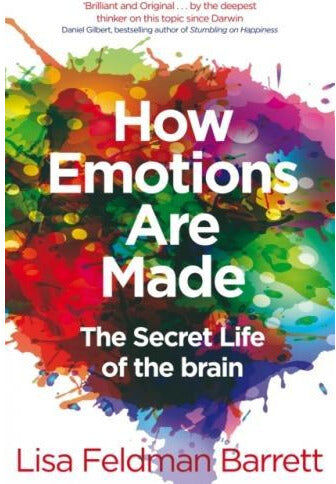
MACMILLAN How Emotions Are Made – The Secret Life of the Brain by Lisa Feldman Barrett Neuroscience & Psychology BestsellerDiscover a groundbreaking new understanding of the human mind with How Emotions Are Made: The Secret Life of the Brain by Lisa Feldman Barrett. Challenging long-held beliefs about how emotions work, neuroscientist Lisa Feldman Barrett presents a revolutionary theory explaining that emotions are not universal reactions, but are actively constructed by the brain. Drawing on cutting-edge research in psychology and neuroscience, the book reveals how the brain predicts, interprets, and shapes our emotional experiences. Written in an accessible and engaging style, this bestseller reshapes how we think about feelings, decision-making, mental health, and human behavior. It’s essential reading for anyone interested in psychology, neuroscience, self-understanding, and emotional intelligence. Why Readers Love This Book: Revolutionary insights into how emotions are created Based on modern neuroscience research Accessible explanations for general readers Practical implications for mental well-being Ideal for psychology and science enthusiasts A thought-provoking exploration of the brain, How Emotions Are Made changes how we understand what it means to feel.3,99 £*Shipping: 1,99 £Secure redirect to the provider
-
iPad Air 11-inch M4 256GB Wi-Fi Starlight Tablet – Liquid Retina Display, Apple Intelligence, 12GB Unified Memory, Wi-Fi 7, Touch ID, New.gadcet-pdp{--g-green:#00a651;color:#1f2430;line-height:1.55;font-size:inherit;max-width:760px}.gadcet-pdp>*:first-child{margin-top:0}.gadcet-pdp p{margin:0 0.9em}.gadcet-pdp h3{font-size:1.05em;font-weight:600;color:#11161f;margin:1.4em 0.5em;padding-left:.5em;border-left:3px solid var(--g-green);border-radius:0;line-height:1.3}.gadcet-pdp ul{list-style:none!important;margin:0 0.9em;padding:0!important}.gadcet-pdp ul li{position:relative;padding:.1em 0.1em 1.5em;margin:0}.gadcet-pdp ul li::before{content:"";position:absolute;left:.16em;top:.45em;width:.36em;height:.66em;border:solid var(--g-green);border-width:0.14em.14em 0;transform:rotate(45deg)}.gadcet-pdp table{width:100%;border-collapse:collapse;margin:.3em 0 1em;font-size:.95em;border:1px solid #e7e9ee!important;border-radius:8px;overflow:hidden}.gadcet-pdp table td{padding:.5em.8em;border-bottom:1px solid #eef0f4!important;vertical-align:top}.gadcet-pdp table tr:last-child td{border-bottom:0!important}.gadcet-pdp table tr:nth-child(even){background:#f7f9f8}.gadcet-pdp table td:first-child{font-weight:600;color:#454c59;width:40%}@media (max-width:600px){.gadcet-pdp table td:first-child{width:42%}} Work, create and unwind with the portable Apple iPad Air 11-inch, powered by the M4 chip and equipped with 256GB storage. Its Liquid Retina display, 12GB unified memory and Wi-Fi 7 connectivity make it a versatile choice for productivity and entertainment. Key Features Apple M4 chip for responsive multitasking, creative apps and gaming 11-inch Liquid Retina display with True Tone and wide colour support 256GB storage for apps, documents, photos, videos and downloads 12GB unified memory for efficient performance across demanding tasks Built for Apple Intelligence Wi-Fi 7 connectivity powered by the Apple N1 wireless networking chip Landscape 12MP Centre Stage front camera for video calls 12MP Wide rear camera with 4K video recording Touch ID integrated into the top button Up to 10 hours of web browsing or video playback on Wi-Fi USB-C with DisplayPort and USB 3 speeds up to 10Gb/s Compatible with Apple Pencil Pro and Magic Keyboard for iPad Air Benefits Move smoothly between work, study, creative projects and entertainment Enjoy detailed visuals for films, photos, notes and browsing Keep files and apps close at hand with generous built-in storage Stay naturally framed during calls with the landscape Centre Stage camera Unlock the iPad and authenticate purchases conveniently with Touch ID Specifications Model Apple iPad Air 11-inch with M4 chip Colour Starlight Storage 256GB Memory 12GB unified memory Display 11-inch Liquid Retina display Display technology LED-backlit Multi-Touch display with IPS technology Connectivity Wi-Fi 7 Cellular connectivity No Front camera Landscape 12MP Centre Stage camera Rear camera 12MP Wide camera with 4K video recording Security Touch ID Port USB-C with DisplayPort and USB 3 up to 10Gb/s Battery life Up to 10 hours of web browsing or video playback on Wi-Fi What...829,00 £*Shipping: 0,00 £Secure redirect to the provider



-
How do you write formulas for nonmetal oxides?
To write formulas for nonmetal oxides, you need to first identify the nonmetal element present in the oxide. Then, determine the oxidation number of the nonmetal element. Finally, write the formula by balancing the charges of the nonmetal element and oxygen. For example, the formula for carbon dioxide (CO2) is written by balancing the +4 oxidation number of carbon with the -2 oxidation number of oxygen. **
-
What are the differences between metal oxides and nonmetal oxides?
Metal oxides are compounds formed between a metal and oxygen, while nonmetal oxides are compounds formed between a nonmetal and oxygen. Metal oxides tend to be basic in nature, meaning they react with acids to form salts and water. Nonmetal oxides, on the other hand, tend to be acidic in nature, meaning they react with bases to form salts and water. Additionally, metal oxides typically have higher melting and boiling points compared to nonmetal oxides. **
-
How can one recognize if an element is a nonmetal?
Nonmetals can be recognized by several characteristics. They are typically located on the right side of the periodic table, are poor conductors of heat and electricity, and have dull or non-shiny appearances. Nonmetals also tend to have lower melting and boiling points compared to metals. Additionally, they often form negative ions when they react with metals. **
-
What are the properties of metal oxides and nonmetal oxides?
Metal oxides are typically basic in nature, meaning they react with acids to form salts and water. They are also typically solid at room temperature and have high melting and boiling points. Nonmetal oxides, on the other hand, are usually acidic in nature, meaning they react with bases to form salts and water. They are often gases or liquids at room temperature and have lower melting and boiling points compared to metal oxides. Both types of oxides play important roles in various chemical reactions and industrial processes. **


Ionic bonding always occurs between a metal and a nonmetal.
Ionic bonding always occurs between a metal and a nonmetal because of the large difference in electronegativity between the two types of elements. Metals have low electronegativity and tend to lose electrons, while nonmetals have high electronen **
What is an electron transfer reaction between a metal and a nonmetal?
An electron transfer reaction between a metal and a nonmetal occurs when the metal atom loses one or more electrons to the nonmetal atom. This transfer of electrons results in the formation of ions, with the metal forming a positively charged ion (cation) and the nonmetal forming a negatively charged ion (anion). This type of reaction is characteristic of ionic bonding, where the attraction between the oppositely charged ions leads to the formation of an ionic compound. Examples of such reactions include the formation of sodium chloride (NaCl) when sodium (a metal) reacts with chlorine (a nonmetal). **
Top-Angebote
Products related to Nonmetal:
-
Tiny Tots Teens Trends Montessori Educational Toy, Wooden Color Cups, Sorting Cognition Game For Early Learning Montessori Educational Toy, Wooden Color Cups, Sorting Cognition Game For Early LearningIntroduce your child to the world of learning with the Montessori Wooden Toy Color Cups. Designed to enhance early cognitive development, this engaging matching sorting cognition game training toy provides hours of educational fun. Perfect for young...59,97 $*Shipping: 0,00 $Secure redirect to the provider
-
Uplift Picks Montessori Bell Learning Toy DIY Cognition Training Game For Kids vacuum CleanerSpark curiosity and hands on discovery with this engaging Montessori bell learning toy designed to make learning playful and interactive. This fun educational cognition training game encourages children to match, identify, and respond to sound and...52,48 $*Shipping: 0,00 $Secure redirect to the provider
-
MacBook Pro 14.2" M5 Laptop – 10-Core CPU, 10-Core GPU, 16GB Unified Memory, 1TB SSD, Liquid Retina XDR & Apple Intelligence Silver, New.gadcet-pdp{--g-green:#00a651;color:#1f2430;line-height:1.55;font-size:inherit;max-width:760px}.gadcet-pdp>*:first-child{margin-top:0}.gadcet-pdp p{margin:0 0.9em}.gadcet-pdp h3{font-size:1.05em;font-weight:600;color:#11161f;margin:1.4em 0.5em;padding-left:.5em;border-left:3px solid var(--g-green);border-radius:0;line-height:1.3}.gadcet-pdp ul{list-style:none!important;margin:0 0.9em;padding:0!important}.gadcet-pdp ul li{position:relative;padding:.1em 0.1em 1.5em;margin:0}.gadcet-pdp ul li::before{content:"";position:absolute;left:.16em;top:.45em;width:.36em;height:.66em;border:solid var(--g-green);border-width:0.14em.14em 0;transform:rotate(45deg)}.gadcet-pdp table{width:100%;border-collapse:collapse;margin:.3em 0 1em;font-size:.95em;border:1px solid #e7e9ee!important;border-radius:8px;overflow:hidden}.gadcet-pdp table td{padding:.5em.8em;border-bottom:1px solid #eef0f4!important;vertical-align:top}.gadcet-pdp table tr:last-child td{border-bottom:0!important}.gadcet-pdp table tr:nth-child(even){background:#f7f9f8}.gadcet-pdp table td:first-child{font-weight:600;color:#454c59;width:40%}@media (max-width:600px){.gadcet-pdp table td:first-child{width:42%}} Power through creative, professional and everyday work with the Apple MacBook Pro 14.2-inch M5 in Silver. With fast Apple silicon, a sharp Liquid Retina XDR display and condition options to suit your budget, it is built for serious productivity. Key Features Apple M5 chip with 10-core CPU and 10-core GPU 16GB unified memory for smooth multitasking 1TB SSD storage for apps, files and creative projects 14.2-inch Liquid Retina XDR display with 3024 x 1964 resolution 120Hz refresh rate and 1000 nits brightness Built for Apple Intelligence and on-device AI tasks Up to 24 hours battery life during playback 12MP Centre Stage camera, three studio-quality mics and six speakers with Spatial Audio Three Thunderbolt 4 ports, MagSafe 3, SDXC, HDMI and headphone jack Supports up to two external displays Benefits Ideal for demanding creative workflows, office productivity and everyday use Fast storage and unified memory help keep projects and apps moving quickly High-quality display makes editing, streaming and multitasking feel more immersive Choose from New or Used condition options to match your needs and budget Specifications Brand Apple Model MacBook Pro 14.2-inch M5 Colour Silver Processor Apple M5 chip, 10-core CPU Graphics 10-core GPU Memory 16GB unified memory Storage 1TB SSD Display 14.2-inch Liquid Retina XDR Resolution 3024 x 1964 pixels Refresh Rate 120Hz Brightness 1000 nits Operating System macOS Ports 3 x Thunderbolt 4, MagSafe 3, SDXC, HDMI, headphone jack Camera 12MP Centre Stage camera Audio Three studio-quality mics, six speakers, Spatial Audio, Dolby Atmos support Connectivity Bluetooth Body Aluminium Dimensions H1.55 x W31.26 x D22.12cm Weight 1.55kg What You'll Receive Apple MacBook Pro 14-inch in your selected condition, plus USB-C to MagSafe 3 Cable (2m). Ideal For A strong choice for...1759,00 £*Shipping: 0,00 £Secure redirect to the provider
-
Uplifted Finds Triple Tier Intelligence Play Tower greenEngage your cat's mind and body with this TripleTier Intelligence Play Tower. This classic interactive toy is designed with three stacked levels, each featuring a captured ball that skitters along a circular track. This multilevel architecture...54,97 $*Shipping: 0,00 $Secure redirect to the provider
-
How is a covalent bond formed when nonmetal atoms meet nonmetal atoms?
When nonmetal atoms meet nonmetal atoms, they can form covalent bonds by sharing electrons. Each nonmetal atom contributes one or more electrons to the bond, creating a shared electron pair between the two atoms. This sharing of electrons allows both atoms to achieve a more stable electron configuration, typically by filling their outermost energy levels. The strength of the covalent bond depends on the number of shared electrons and the distance between the nuclei of the bonded atoms. **
-
How does a nonmetal react with oxygen?
Nonmetals typically react with oxygen to form oxides. This reaction can be highly exothermic, meaning it releases a significant amount of heat. For example, when sulfur reacts with oxygen, it forms sulfur dioxide. Nonmetals generally have a high affinity for oxygen, and the resulting oxides can have a variety of properties, such as being acidic or basic. Overall, the reaction of nonmetals with oxygen is an important aspect of chemical reactivity and plays a role in various natural and industrial processes. **
-
How do you write formulas for nonmetal oxides?
To write formulas for nonmetal oxides, you need to first identify the nonmetal element present in the oxide. Then, determine the oxidation number of the nonmetal element. Finally, write the formula by balancing the charges of the nonmetal element and oxygen. For example, the formula for carbon dioxide (CO2) is written by balancing the +4 oxidation number of carbon with the -2 oxidation number of oxygen. **
-
What are the differences between metal oxides and nonmetal oxides?
Metal oxides are compounds formed between a metal and oxygen, while nonmetal oxides are compounds formed between a nonmetal and oxygen. Metal oxides tend to be basic in nature, meaning they react with acids to form salts and water. Nonmetal oxides, on the other hand, tend to be acidic in nature, meaning they react with bases to form salts and water. Additionally, metal oxides typically have higher melting and boiling points compared to nonmetal oxides. **
Similar search terms for Nonmetal
-
MACMILLAN How Emotions Are Made – The Secret Life of the Brain by Lisa Feldman Barrett Neuroscience & Psychology BestsellerDiscover a groundbreaking new understanding of the human mind with How Emotions Are Made: The Secret Life of the Brain by Lisa Feldman Barrett. Challenging long-held beliefs about how emotions work, neuroscientist Lisa Feldman Barrett presents a revolutionary theory explaining that emotions are not universal reactions, but are actively constructed by the brain. Drawing on cutting-edge research in psychology and neuroscience, the book reveals how the brain predicts, interprets, and shapes our emotional experiences. Written in an accessible and engaging style, this bestseller reshapes how we think about feelings, decision-making, mental health, and human behavior. It’s essential reading for anyone interested in psychology, neuroscience, self-understanding, and emotional intelligence. Why Readers Love This Book: Revolutionary insights into how emotions are created Based on modern neuroscience research Accessible explanations for general readers Practical implications for mental well-being Ideal for psychology and science enthusiasts A thought-provoking exploration of the brain, How Emotions Are Made changes how we understand what it means to feel.3,99 £*Shipping: 1,99 £Secure redirect to the provider
-
iPad Air 11-inch M4 256GB Wi-Fi Starlight Tablet – Liquid Retina Display, Apple Intelligence, 12GB Unified Memory, Wi-Fi 7, Touch ID, New.gadcet-pdp{--g-green:#00a651;color:#1f2430;line-height:1.55;font-size:inherit;max-width:760px}.gadcet-pdp>*:first-child{margin-top:0}.gadcet-pdp p{margin:0 0.9em}.gadcet-pdp h3{font-size:1.05em;font-weight:600;color:#11161f;margin:1.4em 0.5em;padding-left:.5em;border-left:3px solid var(--g-green);border-radius:0;line-height:1.3}.gadcet-pdp ul{list-style:none!important;margin:0 0.9em;padding:0!important}.gadcet-pdp ul li{position:relative;padding:.1em 0.1em 1.5em;margin:0}.gadcet-pdp ul li::before{content:"";position:absolute;left:.16em;top:.45em;width:.36em;height:.66em;border:solid var(--g-green);border-width:0.14em.14em 0;transform:rotate(45deg)}.gadcet-pdp table{width:100%;border-collapse:collapse;margin:.3em 0 1em;font-size:.95em;border:1px solid #e7e9ee!important;border-radius:8px;overflow:hidden}.gadcet-pdp table td{padding:.5em.8em;border-bottom:1px solid #eef0f4!important;vertical-align:top}.gadcet-pdp table tr:last-child td{border-bottom:0!important}.gadcet-pdp table tr:nth-child(even){background:#f7f9f8}.gadcet-pdp table td:first-child{font-weight:600;color:#454c59;width:40%}@media (max-width:600px){.gadcet-pdp table td:first-child{width:42%}} Work, create and unwind with the portable Apple iPad Air 11-inch, powered by the M4 chip and equipped with 256GB storage. Its Liquid Retina display, 12GB unified memory and Wi-Fi 7 connectivity make it a versatile choice for productivity and entertainment. Key Features Apple M4 chip for responsive multitasking, creative apps and gaming 11-inch Liquid Retina display with True Tone and wide colour support 256GB storage for apps, documents, photos, videos and downloads 12GB unified memory for efficient performance across demanding tasks Built for Apple Intelligence Wi-Fi 7 connectivity powered by the Apple N1 wireless networking chip Landscape 12MP Centre Stage front camera for video calls 12MP Wide rear camera with 4K video recording Touch ID integrated into the top button Up to 10 hours of web browsing or video playback on Wi-Fi USB-C with DisplayPort and USB 3 speeds up to 10Gb/s Compatible with Apple Pencil Pro and Magic Keyboard for iPad Air Benefits Move smoothly between work, study, creative projects and entertainment Enjoy detailed visuals for films, photos, notes and browsing Keep files and apps close at hand with generous built-in storage Stay naturally framed during calls with the landscape Centre Stage camera Unlock the iPad and authenticate purchases conveniently with Touch ID Specifications Model Apple iPad Air 11-inch with M4 chip Colour Starlight Storage 256GB Memory 12GB unified memory Display 11-inch Liquid Retina display Display technology LED-backlit Multi-Touch display with IPS technology Connectivity Wi-Fi 7 Cellular connectivity No Front camera Landscape 12MP Centre Stage camera Rear camera 12MP Wide camera with 4K video recording Security Touch ID Port USB-C with DisplayPort and USB 3 up to 10Gb/s Battery life Up to 10 hours of web browsing or video playback on Wi-Fi What...829,00 £*Shipping: 0,00 £Secure redirect to the provider
-
HODDER PUBLISHING David Robson, The Intelligence Trap, Psychology BooksDavid Robson, The Intelligence Trap, Psychology Books How was a brilliant physics professor tricked into carrying 2kg of cocaine across the Argentinian border? Why do doctors misdiagnose 10 to 15% of their patients? Why do Nobel Prize winners spread fake news? We assume that smarter people are less prone to error. But greater education and expertise can often amplify our mistakes while rendering us blind to our biases. This is the 'intelligence trap'. Drawing on the latest behavioural science and historical examples from Socrates to Benjamin Franklin, David Robson demonstrates how to apply our intelligence more wisely; identify bias and enhance our 'rationality quotient'; read and regulate our emotions; fine-tune our intuition; navigate ambiguity and uncertainty; and think more flexibly about seemingly intractable problems. The twenty-first century presents us with complex problems that demand a wiser way of thinking. Whether you are a NASA scientist or a school student, The Intelligence Trap offers a new cognitive toolkit to realise your full potential.1,99 £*Shipping: 1,99 £Secure redirect to the provider
-
Uplift Picks Montessori Bell Learning Toy DIY Cognition Training Game For Kids bubble PotSpark curiosity and hands on discovery with this engaging Montessori bell learning toy designed to make learning playful and interactive. This fun educational cognition training game encourages children to match, identify, and respond to sound and...59,48 $*Shipping: 0,00 $Secure redirect to the provider
-
How can one recognize if an element is a nonmetal?
Nonmetals can be recognized by several characteristics. They are typically located on the right side of the periodic table, are poor conductors of heat and electricity, and have dull or non-shiny appearances. Nonmetals also tend to have lower melting and boiling points compared to metals. Additionally, they often form negative ions when they react with metals. **
-
What are the properties of metal oxides and nonmetal oxides?
Metal oxides are typically basic in nature, meaning they react with acids to form salts and water. They are also typically solid at room temperature and have high melting and boiling points. Nonmetal oxides, on the other hand, are usually acidic in nature, meaning they react with bases to form salts and water. They are often gases or liquids at room temperature and have lower melting and boiling points compared to metal oxides. Both types of oxides play important roles in various chemical reactions and industrial processes. **
-
Ionic bonding always occurs between a metal and a nonmetal.
Ionic bonding always occurs between a metal and a nonmetal because of the large difference in electronegativity between the two types of elements. Metals have low electronegativity and tend to lose electrons, while nonmetals have high electronen **
-
What is an electron transfer reaction between a metal and a nonmetal?
An electron transfer reaction between a metal and a nonmetal occurs when the metal atom loses one or more electrons to the nonmetal atom. This transfer of electrons results in the formation of ions, with the metal forming a positively charged ion (cation) and the nonmetal forming a negatively charged ion (anion). This type of reaction is characteristic of ionic bonding, where the attraction between the oppositely charged ions leads to the formation of an ionic compound. Examples of such reactions include the formation of sodium chloride (NaCl) when sodium (a metal) reacts with chlorine (a nonmetal). **
* All prices are inclusive of VAT and, if applicable, plus shipping costs. The offer information is based on the details provided by the respective shop and is updated through automated processes. Real-time updates do not occur, so deviations can occur in individual cases. ** Note: Parts of this content were created by AI.