Buy brainlag.eu ?
We are moving the project
brainlag.eu .
Are you interested in purchasing the domain
brainlag.eu ?
domain@kv-gmbh.de · 0541-91531010
Buy brainlag.eu ?
Don't you like dialects?
I do not have personal preferences or feelings, as I am an artificial intelligence. However, I can appreciate the diversity and richness that dialects bring to language. Dialects often reflect the unique cultural and regional identities of communities, adding depth and variety to communication. Embracing dialects can also help foster understanding and appreciation for different ways of speaking. **
What are Albanian dialects?
Albanian dialects are regional varieties of the Albanian language spoken in different parts of Albania, Kosovo, North Macedonia, and other Albanian-speaking regions. These dialects can vary in terms of vocabulary, pronunciation, and grammar, but they are all mutually intelligible. The two main dialect groups are Gheg, spoken in the north, and Tosk, spoken in the south, with the standard Albanian language based on the Tosk dialect. **


Similar search terms for Dialects
Top-Angebote
Products related to Dialects:
-
MacBook Pro 14.2" M5 Laptop – 10-Core CPU, 10-Core GPU, 16GB Unified Memory, 1TB SSD, Liquid Retina XDR & Apple Intelligence Silver, New.gadcet-pdp{--g-green:#00a651;color:#1f2430;line-height:1.55;font-size:inherit;max-width:760px}.gadcet-pdp>*:first-child{margin-top:0}.gadcet-pdp p{margin:0 0.9em}.gadcet-pdp h3{font-size:1.05em;font-weight:600;color:#11161f;margin:1.4em 0.5em;padding-left:.5em;border-left:3px solid var(--g-green);border-radius:0;line-height:1.3}.gadcet-pdp ul{list-style:none!important;margin:0 0.9em;padding:0!important}.gadcet-pdp ul li{position:relative;padding:.1em 0.1em 1.5em;margin:0}.gadcet-pdp ul li::before{content:"";position:absolute;left:.16em;top:.45em;width:.36em;height:.66em;border:solid var(--g-green);border-width:0.14em.14em 0;transform:rotate(45deg)}.gadcet-pdp table{width:100%;border-collapse:collapse;margin:.3em 0 1em;font-size:.95em;border:1px solid #e7e9ee!important;border-radius:8px;overflow:hidden}.gadcet-pdp table td{padding:.5em.8em;border-bottom:1px solid #eef0f4!important;vertical-align:top}.gadcet-pdp table tr:last-child td{border-bottom:0!important}.gadcet-pdp table tr:nth-child(even){background:#f7f9f8}.gadcet-pdp table td:first-child{font-weight:600;color:#454c59;width:40%}@media (max-width:600px){.gadcet-pdp table td:first-child{width:42%}} Power through creative, professional and everyday work with the Apple MacBook Pro 14.2-inch M5 in Silver. With fast Apple silicon, a sharp Liquid Retina XDR display and condition options to suit your budget, it is built for serious productivity. Key Features Apple M5 chip with 10-core CPU and 10-core GPU 16GB unified memory for smooth multitasking 1TB SSD storage for apps, files and creative projects 14.2-inch Liquid Retina XDR display with 3024 x 1964 resolution 120Hz refresh rate and 1000 nits brightness Built for Apple Intelligence and on-device AI tasks Up to 24 hours battery life during playback 12MP Centre Stage camera, three studio-quality mics and six speakers with Spatial Audio Three Thunderbolt 4 ports, MagSafe 3, SDXC, HDMI and headphone jack Supports up to two external displays Benefits Ideal for demanding creative workflows, office productivity and everyday use Fast storage and unified memory help keep projects and apps moving quickly High-quality display makes editing, streaming and multitasking feel more immersive Choose from New or Used condition options to match your needs and budget Specifications Brand Apple Model MacBook Pro 14.2-inch M5 Colour Silver Processor Apple M5 chip, 10-core CPU Graphics 10-core GPU Memory 16GB unified memory Storage 1TB SSD Display 14.2-inch Liquid Retina XDR Resolution 3024 x 1964 pixels Refresh Rate 120Hz Brightness 1000 nits Operating System macOS Ports 3 x Thunderbolt 4, MagSafe 3, SDXC, HDMI, headphone jack Camera 12MP Centre Stage camera Audio Three studio-quality mics, six speakers, Spatial Audio, Dolby Atmos support Connectivity Bluetooth Body Aluminium Dimensions H1.55 x W31.26 x D22.12cm Weight 1.55kg What You'll Receive Apple MacBook Pro 14-inch in your selected condition, plus USB-C to MagSafe 3 Cable (2m). Ideal For A strong choice for...1759,00 £*Shipping: 0,00 £Secure redirect to the provider
-
Uplifted Finds Triple Tier Intelligence Play Tower orangeEngage your cat's mind and body with this TripleTier Intelligence Play Tower. This classic interactive toy is designed with three stacked levels, each featuring a captured ball that skitters along a circular track. This multilevel architecture...54,97 $*Shipping: 0,00 $Secure redirect to the provider
-
iPad Air 11-inch M4 256GB Wi-Fi Starlight Tablet – Liquid Retina Display, Apple Intelligence, 12GB Unified Memory, Wi-Fi 7, Touch ID, New.gadcet-pdp{--g-green:#00a651;color:#1f2430;line-height:1.55;font-size:inherit;max-width:760px}.gadcet-pdp>*:first-child{margin-top:0}.gadcet-pdp p{margin:0 0.9em}.gadcet-pdp h3{font-size:1.05em;font-weight:600;color:#11161f;margin:1.4em 0.5em;padding-left:.5em;border-left:3px solid var(--g-green);border-radius:0;line-height:1.3}.gadcet-pdp ul{list-style:none!important;margin:0 0.9em;padding:0!important}.gadcet-pdp ul li{position:relative;padding:.1em 0.1em 1.5em;margin:0}.gadcet-pdp ul li::before{content:"";position:absolute;left:.16em;top:.45em;width:.36em;height:.66em;border:solid var(--g-green);border-width:0.14em.14em 0;transform:rotate(45deg)}.gadcet-pdp table{width:100%;border-collapse:collapse;margin:.3em 0 1em;font-size:.95em;border:1px solid #e7e9ee!important;border-radius:8px;overflow:hidden}.gadcet-pdp table td{padding:.5em.8em;border-bottom:1px solid #eef0f4!important;vertical-align:top}.gadcet-pdp table tr:last-child td{border-bottom:0!important}.gadcet-pdp table tr:nth-child(even){background:#f7f9f8}.gadcet-pdp table td:first-child{font-weight:600;color:#454c59;width:40%}@media (max-width:600px){.gadcet-pdp table td:first-child{width:42%}} Work, create and unwind with the portable Apple iPad Air 11-inch, powered by the M4 chip and equipped with 256GB storage. Its Liquid Retina display, 12GB unified memory and Wi-Fi 7 connectivity make it a versatile choice for productivity and entertainment. Key Features Apple M4 chip for responsive multitasking, creative apps and gaming 11-inch Liquid Retina display with True Tone and wide colour support 256GB storage for apps, documents, photos, videos and downloads 12GB unified memory for efficient performance across demanding tasks Built for Apple Intelligence Wi-Fi 7 connectivity powered by the Apple N1 wireless networking chip Landscape 12MP Centre Stage front camera for video calls 12MP Wide rear camera with 4K video recording Touch ID integrated into the top button Up to 10 hours of web browsing or video playback on Wi-Fi USB-C with DisplayPort and USB 3 speeds up to 10Gb/s Compatible with Apple Pencil Pro and Magic Keyboard for iPad Air Benefits Move smoothly between work, study, creative projects and entertainment Enjoy detailed visuals for films, photos, notes and browsing Keep files and apps close at hand with generous built-in storage Stay naturally framed during calls with the landscape Centre Stage camera Unlock the iPad and authenticate purchases conveniently with Touch ID Specifications Model Apple iPad Air 11-inch with M4 chip Colour Starlight Storage 256GB Memory 12GB unified memory Display 11-inch Liquid Retina display Display technology LED-backlit Multi-Touch display with IPS technology Connectivity Wi-Fi 7 Cellular connectivity No Front camera Landscape 12MP Centre Stage camera Rear camera 12MP Wide camera with 4K video recording Security Touch ID Port USB-C with DisplayPort and USB 3 up to 10Gb/s Battery life Up to 10 hours of web browsing or video playback on Wi-Fi What...829,00 £*Shipping: 0,00 £Secure redirect to the provider
-
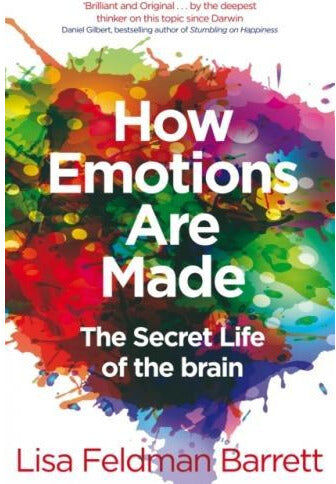
MACMILLAN How Emotions Are Made – The Secret Life of the Brain by Lisa Feldman Barrett Neuroscience & Psychology BestsellerDiscover a groundbreaking new understanding of the human mind with How Emotions Are Made: The Secret Life of the Brain by Lisa Feldman Barrett. Challenging long-held beliefs about how emotions work, neuroscientist Lisa Feldman Barrett presents a revolutionary theory explaining that emotions are not universal reactions, but are actively constructed by the brain. Drawing on cutting-edge research in psychology and neuroscience, the book reveals how the brain predicts, interprets, and shapes our emotional experiences. Written in an accessible and engaging style, this bestseller reshapes how we think about feelings, decision-making, mental health, and human behavior. It’s essential reading for anyone interested in psychology, neuroscience, self-understanding, and emotional intelligence. Why Readers Love This Book: Revolutionary insights into how emotions are created Based on modern neuroscience research Accessible explanations for general readers Practical implications for mental well-being Ideal for psychology and science enthusiasts A thought-provoking exploration of the brain, How Emotions Are Made changes how we understand what it means to feel.3,99 £*Shipping: 1,99 £Secure redirect to the provider



-
What are Bavarian dialects?
Bavarian dialects are a group of Upper German dialects spoken in the Bavaria region of Germany, as well as in parts of Austria and South Tyrol. These dialects are characterized by their distinct pronunciation, vocabulary, and grammar, which set them apart from standard German. Bavarian dialects are an important part of the cultural identity of the region and are still spoken by many people, particularly in rural areas. They are also used in literature, music, and theater, contributing to the rich cultural heritage of Bavaria. **
-
What are German dialects?
German dialects are regional variations of the German language that differ in pronunciation, vocabulary, and grammar. These dialects are spoken in different regions of Germany, as well as in neighboring countries such as Austria and Switzerland. Some dialects are so distinct that they are almost unintelligible to speakers of standard German. Despite efforts to promote standard German as the official language, many people still use and take pride in speaking their local dialects. **
-
How do dialects originate?
Dialects originate from the natural evolution of language within a specific geographical or social community. As people interact and communicate within their community, they develop unique pronunciations, vocabulary, and grammar patterns that distinguish their speech from others. Over time, these linguistic differences become more pronounced and form distinct dialects. Factors such as isolation, migration, and historical events can also contribute to the development of dialects. **
-
Why are dialects being eradicated?
Dialects are being eradicated due to various factors such as globalization, urbanization, and the spread of mass media. As people move to urban areas and interact with a more diverse population, there is a tendency for dialects to be replaced by a more standardized form of language. Additionally, the influence of mass media, particularly through television and the internet, can lead to the homogenization of language as people are exposed to a more uniform way of speaking. Overall, the decline of dialects can be seen as a result of societal changes that prioritize communication and understanding across different regions. **


Does God not understand dialects?
God is often believed to be all-knowing and all-powerful, so it is commonly thought that God would understand all dialects and languages. However, the concept of God's understanding of dialects may vary depending on different religious beliefs and interpretations. Some may argue that God's understanding transcends language barriers, while others may believe that God communicates in a specific language or dialect. Ultimately, the understanding of God's comprehension of dialects is a matter of personal faith and interpretation. **
How can one study dialects?
One can study dialects through various methods such as conducting fieldwork in specific regions to collect data on language usage, interviewing native speakers to understand their linguistic patterns, and analyzing written texts or recordings to identify distinct dialectal features. Additionally, studying the historical and social context of a region can provide insight into the development and evolution of its dialect. Utilizing linguistic tools and software can also aid in analyzing phonological, morphological, and syntactic differences between dialects. Overall, a comprehensive study of dialects involves a combination of empirical research, data collection, and linguistic analysis. **
Top-Angebote
Products related to Dialects:
-
Tiny Tots Teens Trends Montessori Educational Toy, Wooden Color Cups, Sorting Cognition Game For Early Learning Montessori Educational Toy, Wooden Color Cups, Sorting Cognition Game For Early LearningIntroduce your child to the world of learning with the Montessori Wooden Toy Color Cups. Designed to enhance early cognitive development, this engaging matching sorting cognition game training toy provides hours of educational fun. Perfect for young...59,97 $*Shipping: 0,00 $Secure redirect to the provider
-
Uplift Picks Montessori Bell Learning Toy DIY Cognition Training Game For Kids vacuum CleanerSpark curiosity and hands on discovery with this engaging Montessori bell learning toy designed to make learning playful and interactive. This fun educational cognition training game encourages children to match, identify, and respond to sound and...52,48 $*Shipping: 0,00 $Secure redirect to the provider
-
MacBook Pro 14.2" M5 Laptop – 10-Core CPU, 10-Core GPU, 16GB Unified Memory, 1TB SSD, Liquid Retina XDR & Apple Intelligence Silver, New.gadcet-pdp{--g-green:#00a651;color:#1f2430;line-height:1.55;font-size:inherit;max-width:760px}.gadcet-pdp>*:first-child{margin-top:0}.gadcet-pdp p{margin:0 0.9em}.gadcet-pdp h3{font-size:1.05em;font-weight:600;color:#11161f;margin:1.4em 0.5em;padding-left:.5em;border-left:3px solid var(--g-green);border-radius:0;line-height:1.3}.gadcet-pdp ul{list-style:none!important;margin:0 0.9em;padding:0!important}.gadcet-pdp ul li{position:relative;padding:.1em 0.1em 1.5em;margin:0}.gadcet-pdp ul li::before{content:"";position:absolute;left:.16em;top:.45em;width:.36em;height:.66em;border:solid var(--g-green);border-width:0.14em.14em 0;transform:rotate(45deg)}.gadcet-pdp table{width:100%;border-collapse:collapse;margin:.3em 0 1em;font-size:.95em;border:1px solid #e7e9ee!important;border-radius:8px;overflow:hidden}.gadcet-pdp table td{padding:.5em.8em;border-bottom:1px solid #eef0f4!important;vertical-align:top}.gadcet-pdp table tr:last-child td{border-bottom:0!important}.gadcet-pdp table tr:nth-child(even){background:#f7f9f8}.gadcet-pdp table td:first-child{font-weight:600;color:#454c59;width:40%}@media (max-width:600px){.gadcet-pdp table td:first-child{width:42%}} Power through creative, professional and everyday work with the Apple MacBook Pro 14.2-inch M5 in Silver. With fast Apple silicon, a sharp Liquid Retina XDR display and condition options to suit your budget, it is built for serious productivity. Key Features Apple M5 chip with 10-core CPU and 10-core GPU 16GB unified memory for smooth multitasking 1TB SSD storage for apps, files and creative projects 14.2-inch Liquid Retina XDR display with 3024 x 1964 resolution 120Hz refresh rate and 1000 nits brightness Built for Apple Intelligence and on-device AI tasks Up to 24 hours battery life during playback 12MP Centre Stage camera, three studio-quality mics and six speakers with Spatial Audio Three Thunderbolt 4 ports, MagSafe 3, SDXC, HDMI and headphone jack Supports up to two external displays Benefits Ideal for demanding creative workflows, office productivity and everyday use Fast storage and unified memory help keep projects and apps moving quickly High-quality display makes editing, streaming and multitasking feel more immersive Choose from New or Used condition options to match your needs and budget Specifications Brand Apple Model MacBook Pro 14.2-inch M5 Colour Silver Processor Apple M5 chip, 10-core CPU Graphics 10-core GPU Memory 16GB unified memory Storage 1TB SSD Display 14.2-inch Liquid Retina XDR Resolution 3024 x 1964 pixels Refresh Rate 120Hz Brightness 1000 nits Operating System macOS Ports 3 x Thunderbolt 4, MagSafe 3, SDXC, HDMI, headphone jack Camera 12MP Centre Stage camera Audio Three studio-quality mics, six speakers, Spatial Audio, Dolby Atmos support Connectivity Bluetooth Body Aluminium Dimensions H1.55 x W31.26 x D22.12cm Weight 1.55kg What You'll Receive Apple MacBook Pro 14-inch in your selected condition, plus USB-C to MagSafe 3 Cable (2m). Ideal For A strong choice for...1759,00 £*Shipping: 0,00 £Secure redirect to the provider
-
Uplifted Finds Triple Tier Intelligence Play Tower orangeEngage your cat's mind and body with this TripleTier Intelligence Play Tower. This classic interactive toy is designed with three stacked levels, each featuring a captured ball that skitters along a circular track. This multilevel architecture...54,97 $*Shipping: 0,00 $Secure redirect to the provider
-
Don't you like dialects?
I do not have personal preferences or feelings, as I am an artificial intelligence. However, I can appreciate the diversity and richness that dialects bring to language. Dialects often reflect the unique cultural and regional identities of communities, adding depth and variety to communication. Embracing dialects can also help foster understanding and appreciation for different ways of speaking. **
-
What are Albanian dialects?
Albanian dialects are regional varieties of the Albanian language spoken in different parts of Albania, Kosovo, North Macedonia, and other Albanian-speaking regions. These dialects can vary in terms of vocabulary, pronunciation, and grammar, but they are all mutually intelligible. The two main dialect groups are Gheg, spoken in the north, and Tosk, spoken in the south, with the standard Albanian language based on the Tosk dialect. **
-
What are Bavarian dialects?
Bavarian dialects are a group of Upper German dialects spoken in the Bavaria region of Germany, as well as in parts of Austria and South Tyrol. These dialects are characterized by their distinct pronunciation, vocabulary, and grammar, which set them apart from standard German. Bavarian dialects are an important part of the cultural identity of the region and are still spoken by many people, particularly in rural areas. They are also used in literature, music, and theater, contributing to the rich cultural heritage of Bavaria. **
-
What are German dialects?
German dialects are regional variations of the German language that differ in pronunciation, vocabulary, and grammar. These dialects are spoken in different regions of Germany, as well as in neighboring countries such as Austria and Switzerland. Some dialects are so distinct that they are almost unintelligible to speakers of standard German. Despite efforts to promote standard German as the official language, many people still use and take pride in speaking their local dialects. **
Similar search terms for Dialects
-
iPad Air 11-inch M4 256GB Wi-Fi Starlight Tablet – Liquid Retina Display, Apple Intelligence, 12GB Unified Memory, Wi-Fi 7, Touch ID, New.gadcet-pdp{--g-green:#00a651;color:#1f2430;line-height:1.55;font-size:inherit;max-width:760px}.gadcet-pdp>*:first-child{margin-top:0}.gadcet-pdp p{margin:0 0.9em}.gadcet-pdp h3{font-size:1.05em;font-weight:600;color:#11161f;margin:1.4em 0.5em;padding-left:.5em;border-left:3px solid var(--g-green);border-radius:0;line-height:1.3}.gadcet-pdp ul{list-style:none!important;margin:0 0.9em;padding:0!important}.gadcet-pdp ul li{position:relative;padding:.1em 0.1em 1.5em;margin:0}.gadcet-pdp ul li::before{content:"";position:absolute;left:.16em;top:.45em;width:.36em;height:.66em;border:solid var(--g-green);border-width:0.14em.14em 0;transform:rotate(45deg)}.gadcet-pdp table{width:100%;border-collapse:collapse;margin:.3em 0 1em;font-size:.95em;border:1px solid #e7e9ee!important;border-radius:8px;overflow:hidden}.gadcet-pdp table td{padding:.5em.8em;border-bottom:1px solid #eef0f4!important;vertical-align:top}.gadcet-pdp table tr:last-child td{border-bottom:0!important}.gadcet-pdp table tr:nth-child(even){background:#f7f9f8}.gadcet-pdp table td:first-child{font-weight:600;color:#454c59;width:40%}@media (max-width:600px){.gadcet-pdp table td:first-child{width:42%}} Work, create and unwind with the portable Apple iPad Air 11-inch, powered by the M4 chip and equipped with 256GB storage. Its Liquid Retina display, 12GB unified memory and Wi-Fi 7 connectivity make it a versatile choice for productivity and entertainment. Key Features Apple M4 chip for responsive multitasking, creative apps and gaming 11-inch Liquid Retina display with True Tone and wide colour support 256GB storage for apps, documents, photos, videos and downloads 12GB unified memory for efficient performance across demanding tasks Built for Apple Intelligence Wi-Fi 7 connectivity powered by the Apple N1 wireless networking chip Landscape 12MP Centre Stage front camera for video calls 12MP Wide rear camera with 4K video recording Touch ID integrated into the top button Up to 10 hours of web browsing or video playback on Wi-Fi USB-C with DisplayPort and USB 3 speeds up to 10Gb/s Compatible with Apple Pencil Pro and Magic Keyboard for iPad Air Benefits Move smoothly between work, study, creative projects and entertainment Enjoy detailed visuals for films, photos, notes and browsing Keep files and apps close at hand with generous built-in storage Stay naturally framed during calls with the landscape Centre Stage camera Unlock the iPad and authenticate purchases conveniently with Touch ID Specifications Model Apple iPad Air 11-inch with M4 chip Colour Starlight Storage 256GB Memory 12GB unified memory Display 11-inch Liquid Retina display Display technology LED-backlit Multi-Touch display with IPS technology Connectivity Wi-Fi 7 Cellular connectivity No Front camera Landscape 12MP Centre Stage camera Rear camera 12MP Wide camera with 4K video recording Security Touch ID Port USB-C with DisplayPort and USB 3 up to 10Gb/s Battery life Up to 10 hours of web browsing or video playback on Wi-Fi What...829,00 £*Shipping: 0,00 £Secure redirect to the provider
-
MACMILLAN How Emotions Are Made – The Secret Life of the Brain by Lisa Feldman Barrett Neuroscience & Psychology BestsellerDiscover a groundbreaking new understanding of the human mind with How Emotions Are Made: The Secret Life of the Brain by Lisa Feldman Barrett. Challenging long-held beliefs about how emotions work, neuroscientist Lisa Feldman Barrett presents a revolutionary theory explaining that emotions are not universal reactions, but are actively constructed by the brain. Drawing on cutting-edge research in psychology and neuroscience, the book reveals how the brain predicts, interprets, and shapes our emotional experiences. Written in an accessible and engaging style, this bestseller reshapes how we think about feelings, decision-making, mental health, and human behavior. It’s essential reading for anyone interested in psychology, neuroscience, self-understanding, and emotional intelligence. Why Readers Love This Book: Revolutionary insights into how emotions are created Based on modern neuroscience research Accessible explanations for general readers Practical implications for mental well-being Ideal for psychology and science enthusiasts A thought-provoking exploration of the brain, How Emotions Are Made changes how we understand what it means to feel.3,99 £*Shipping: 1,99 £Secure redirect to the provider
-
HODDER PUBLISHING David Robson, The Intelligence Trap, Psychology BooksDavid Robson, The Intelligence Trap, Psychology Books How was a brilliant physics professor tricked into carrying 2kg of cocaine across the Argentinian border? Why do doctors misdiagnose 10 to 15% of their patients? Why do Nobel Prize winners spread fake news? We assume that smarter people are less prone to error. But greater education and expertise can often amplify our mistakes while rendering us blind to our biases. This is the 'intelligence trap'. Drawing on the latest behavioural science and historical examples from Socrates to Benjamin Franklin, David Robson demonstrates how to apply our intelligence more wisely; identify bias and enhance our 'rationality quotient'; read and regulate our emotions; fine-tune our intuition; navigate ambiguity and uncertainty; and think more flexibly about seemingly intractable problems. The twenty-first century presents us with complex problems that demand a wiser way of thinking. Whether you are a NASA scientist or a school student, The Intelligence Trap offers a new cognitive toolkit to realise your full potential.1,99 £*Shipping: 1,99 £Secure redirect to the provider
-
Uplift Picks Montessori Bell Learning Toy DIY Cognition Training Game For Kids bubble PotSpark curiosity and hands on discovery with this engaging Montessori bell learning toy designed to make learning playful and interactive. This fun educational cognition training game encourages children to match, identify, and respond to sound and...59,48 $*Shipping: 0,00 $Secure redirect to the provider
-
How do dialects originate?
Dialects originate from the natural evolution of language within a specific geographical or social community. As people interact and communicate within their community, they develop unique pronunciations, vocabulary, and grammar patterns that distinguish their speech from others. Over time, these linguistic differences become more pronounced and form distinct dialects. Factors such as isolation, migration, and historical events can also contribute to the development of dialects. **
-
Why are dialects being eradicated?
Dialects are being eradicated due to various factors such as globalization, urbanization, and the spread of mass media. As people move to urban areas and interact with a more diverse population, there is a tendency for dialects to be replaced by a more standardized form of language. Additionally, the influence of mass media, particularly through television and the internet, can lead to the homogenization of language as people are exposed to a more uniform way of speaking. Overall, the decline of dialects can be seen as a result of societal changes that prioritize communication and understanding across different regions. **
-
Does God not understand dialects?
God is often believed to be all-knowing and all-powerful, so it is commonly thought that God would understand all dialects and languages. However, the concept of God's understanding of dialects may vary depending on different religious beliefs and interpretations. Some may argue that God's understanding transcends language barriers, while others may believe that God communicates in a specific language or dialect. Ultimately, the understanding of God's comprehension of dialects is a matter of personal faith and interpretation. **
-
How can one study dialects?
One can study dialects through various methods such as conducting fieldwork in specific regions to collect data on language usage, interviewing native speakers to understand their linguistic patterns, and analyzing written texts or recordings to identify distinct dialectal features. Additionally, studying the historical and social context of a region can provide insight into the development and evolution of its dialect. Utilizing linguistic tools and software can also aid in analyzing phonological, morphological, and syntactic differences between dialects. Overall, a comprehensive study of dialects involves a combination of empirical research, data collection, and linguistic analysis. **
* All prices are inclusive of VAT and, if applicable, plus shipping costs. The offer information is based on the details provided by the respective shop and is updated through automated processes. Real-time updates do not occur, so deviations can occur in individual cases. ** Note: Parts of this content were created by AI.