Buy brainlag.eu ?
We are moving the project
brainlag.eu .
Are you interested in purchasing the domain
brainlag.eu ?
domain@kv-gmbh.de · 0541-91531010
Buy brainlag.eu ?
What is an isometry with non-orthogonal corners?
An isometry with non-orthogonal corners is a transformation that preserves distances and angles, but the corners of the shape are not at right angles to each other. This means that the shape is still congruent to its original form after the transformation, but the angles at the corners are not 90 degrees. Isometries with non-orthogonal corners can include rotations, reflections, translations, and glide reflections. These transformations are important in geometry and can be used to study the properties of shapes and figures. **
What is an isometry with non-orthogonal vertices?
An isometry with non-orthogonal vertices is a transformation that preserves distances and angles between points, but the vertices are not at right angles to each other. This means that the shape is still congruent to its original form, but the angles between the edges are not necessarily 90 degrees. Isometries with non-orthogonal vertices can include translations, rotations, reflections, and glide reflections. These transformations are important in geometry and can help us understand the properties of shapes in different orientations. **


Similar search terms for Non-orthogonal
Top-Angebote
Products related to Non-orthogonal:
-
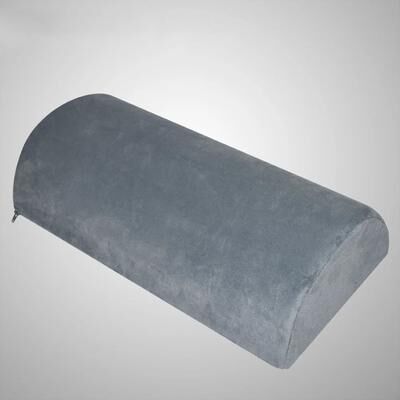
Uplift Treasures Half Moon Memory Foam Bolster Pillow Non Slip Cushion grayProduct Description: Enhance your comfort wherever you sit or rest with this half moon memory foam bolster pillow. Designed for versatile supportwhether for legs, knees, lower back, or headits ergonomic shape and nonslip base help reduce pressure...124,97 $*Shipping: 0,00 $Secure redirect to the provider
-
Kingston ValueRAM 8GB DDR3 1600MHz Non-ECC CL11 240-pin DIMM Desktop MemoryKingston ValueRAM 8GB DDR3 desktop memory module (1 x 8GB), 1600MHz (PC3-12800), non-ECC, unbuffered, CL11, 240-pin DIMM, 1.5V. A straightforward capacity upgrade for DDR3 desktop PCs. Lifetime warranty.121,49 £*Shipping: 0,00 £Secure redirect to the provider
-
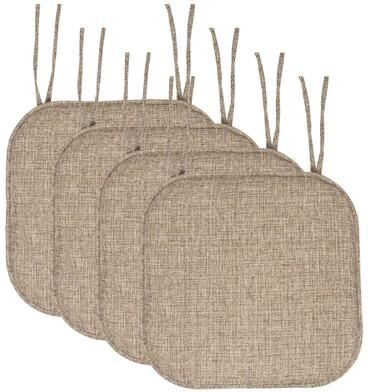
Sweet Home Collection Aria Memory Foam Non-Slip Chair Cushion with TiesAdd a pop of color and comfort to your dining area, breakfast nook, or sporting event with these trendy Aria chair pads. Each pad is crafted from a cozy layer of memory foam with a colorful cover.25,67 $*Shipping: 0,00 $Secure redirect to the provider
-
Sweet Home Collection Aria Memory Foam Non-Slip Chair Cushion with TiesAdd a pop of color and comfort to your dining area, breakfast nook, or sporting event with these trendy Aria chair pads. Each pad is crafted from a cozy layer of memory foam with a colorful cover.39,49 $*Shipping: 0,00 $Secure redirect to the provider


-
What is an orthogonal vector?
An orthogonal vector is a vector that is perpendicular to another vector. In other words, two vectors are orthogonal if their dot product is zero. Geometrically, this means that the two vectors form a 90-degree angle with each other. Orthogonal vectors are important in many areas of mathematics and physics, including linear algebra and vector calculus. **
-
What does the term orthogonal mean?
The term orthogonal refers to two things being perpendicular or at right angles to each other. In mathematics, it often refers to vectors or matrices that are perpendicular to each other. In a broader sense, it can also refer to any two things that are independent or unrelated to each other. **
-
When are planes and lines orthogonal?
Planes and lines are orthogonal when the line is perpendicular to the plane. This means that the line forms a 90-degree angle with the plane, creating a right angle. In other words, the direction of the line is perpendicular to the direction of the plane. This relationship is important in geometry and engineering, as it affects the intersection and orientation of different geometric elements. **
-
Are linearly independent vectors always orthogonal?
No, linearly independent vectors are not always orthogonal. Linear independence means that no vector in the set can be written as a linear combination of the others, while orthogonality means that the vectors are perpendicular to each other. It is possible for linearly independent vectors to be orthogonal, but it is not a guarantee. For example, in three-dimensional space, the vectors (1, 0, 0), (0, 1, 0), and (0, 0, 1) are linearly independent and orthogonal, but the vectors (1, 1, 0) and (0, 1, 1) are linearly independent but not orthogonal. **
What is a proof for two orthogonal?
Two vectors are orthogonal if their dot product is zero. This can be proven by calculating the dot product of the two vectors and showing that it equals zero. If the dot product is zero, it means that the vectors are perpendicular to each other, which is the definition of orthogonality in Euclidean space. **
How do you determine the orthogonal complement?
To determine the orthogonal complement of a subspace, you first need to find a basis for the subspace. Then, you can use the Gram-Schmidt process to find an orthogonal basis for the subspace. Finally, the orthogonal complement is the set of all vectors in the vector space that are orthogonal to every vector in the basis of the subspace. **
Top-Angebote
Products related to Non-orthogonal:
-
Unique Soft Non Slip Memory Foam Bathroom Rug Absorbent for ToiletThis memory foam bathroom rug is ultra-soft microfiber coral velvet outer material and thick, cushiony memory foam filling form to the shape of your body, relieving pressure on your feet.51,99 $*Shipping: 0,00 $Secure redirect to the provider
-
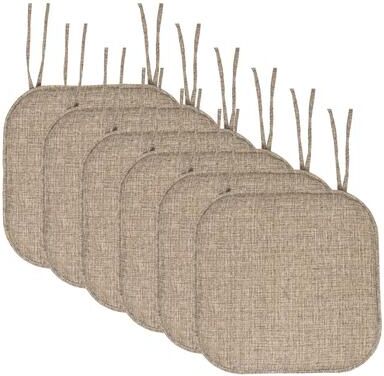
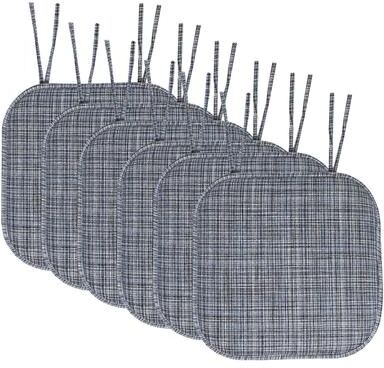
Sweet Home Collection Aria Memory Foam Non-Slip Chair Cushion with TiesAdd a pop of color and comfort to your dining area, breakfast nook, or sporting event with these trendy Aria chair pads. Each pad is crafted from a cozy layer of memory foam with a colorful cover.77,51 $*Shipping: 0,00 $Secure redirect to the provider
-
Uplift Treasures Half Moon Memory Foam Bolster Pillow Non Slip Cushion grayProduct Description: Enhance your comfort wherever you sit or rest with this half moon memory foam bolster pillow. Designed for versatile supportwhether for legs, knees, lower back, or headits ergonomic shape and nonslip base help reduce pressure...124,97 $*Shipping: 0,00 $Secure redirect to the provider
-
Kingston ValueRAM 8GB DDR3 1600MHz Non-ECC CL11 240-pin DIMM Desktop MemoryKingston ValueRAM 8GB DDR3 desktop memory module (1 x 8GB), 1600MHz (PC3-12800), non-ECC, unbuffered, CL11, 240-pin DIMM, 1.5V. A straightforward capacity upgrade for DDR3 desktop PCs. Lifetime warranty.121,49 £*Shipping: 0,00 £Secure redirect to the provider
-
What is an isometry with non-orthogonal corners?
An isometry with non-orthogonal corners is a transformation that preserves distances and angles, but the corners of the shape are not at right angles to each other. This means that the shape is still congruent to its original form after the transformation, but the angles at the corners are not 90 degrees. Isometries with non-orthogonal corners can include rotations, reflections, translations, and glide reflections. These transformations are important in geometry and can be used to study the properties of shapes and figures. **
-
What is an isometry with non-orthogonal vertices?
An isometry with non-orthogonal vertices is a transformation that preserves distances and angles between points, but the vertices are not at right angles to each other. This means that the shape is still congruent to its original form, but the angles between the edges are not necessarily 90 degrees. Isometries with non-orthogonal vertices can include translations, rotations, reflections, and glide reflections. These transformations are important in geometry and can help us understand the properties of shapes in different orientations. **
-
What is an orthogonal vector?
An orthogonal vector is a vector that is perpendicular to another vector. In other words, two vectors are orthogonal if their dot product is zero. Geometrically, this means that the two vectors form a 90-degree angle with each other. Orthogonal vectors are important in many areas of mathematics and physics, including linear algebra and vector calculus. **
-
What does the term orthogonal mean?
The term orthogonal refers to two things being perpendicular or at right angles to each other. In mathematics, it often refers to vectors or matrices that are perpendicular to each other. In a broader sense, it can also refer to any two things that are independent or unrelated to each other. **
Similar search terms for Non-orthogonal
-
Sweet Home Collection Aria Memory Foam Non-Slip Chair Cushion with TiesAdd a pop of color and comfort to your dining area, breakfast nook, or sporting event with these trendy Aria chair pads. Each pad is crafted from a cozy layer of memory foam with a colorful cover.25,67 $*Shipping: 0,00 $Secure redirect to the provider
-
Sweet Home Collection Aria Memory Foam Non-Slip Chair Cushion with TiesAdd a pop of color and comfort to your dining area, breakfast nook, or sporting event with these trendy Aria chair pads. Each pad is crafted from a cozy layer of memory foam with a colorful cover.39,49 $*Shipping: 0,00 $Secure redirect to the provider
-
Sweet Home Collection Aria Memory Foam Non-Slip Chair Cushion with TiesAdd a pop of color and comfort to your dining area, breakfast nook, or sporting event with these trendy Aria chair pads. Each pad is crafted from a cozy layer of memory foam with a colorful cover.48,59 $*Shipping: 0,00 $Secure redirect to the provider
-
Sweet Home Collection Aria Memory Foam Non-Slip Chair Cushion with TiesAdd a pop of color and comfort to your dining area, breakfast nook, or sporting event with these trendy Aria chair pads. Each pad is crafted from a cozy layer of memory foam with a colorful cover.50,53 $*Shipping: 0,00 $Secure redirect to the provider
-
When are planes and lines orthogonal?
Planes and lines are orthogonal when the line is perpendicular to the plane. This means that the line forms a 90-degree angle with the plane, creating a right angle. In other words, the direction of the line is perpendicular to the direction of the plane. This relationship is important in geometry and engineering, as it affects the intersection and orientation of different geometric elements. **
-
Are linearly independent vectors always orthogonal?
No, linearly independent vectors are not always orthogonal. Linear independence means that no vector in the set can be written as a linear combination of the others, while orthogonality means that the vectors are perpendicular to each other. It is possible for linearly independent vectors to be orthogonal, but it is not a guarantee. For example, in three-dimensional space, the vectors (1, 0, 0), (0, 1, 0), and (0, 0, 1) are linearly independent and orthogonal, but the vectors (1, 1, 0) and (0, 1, 1) are linearly independent but not orthogonal. **
-
What is a proof for two orthogonal?
Two vectors are orthogonal if their dot product is zero. This can be proven by calculating the dot product of the two vectors and showing that it equals zero. If the dot product is zero, it means that the vectors are perpendicular to each other, which is the definition of orthogonality in Euclidean space. **
-
How do you determine the orthogonal complement?
To determine the orthogonal complement of a subspace, you first need to find a basis for the subspace. Then, you can use the Gram-Schmidt process to find an orthogonal basis for the subspace. Finally, the orthogonal complement is the set of all vectors in the vector space that are orthogonal to every vector in the basis of the subspace. **
* All prices are inclusive of VAT and, if applicable, plus shipping costs. The offer information is based on the details provided by the respective shop and is updated through automated processes. Real-time updates do not occur, so deviations can occur in individual cases. ** Note: Parts of this content were created by AI.