Buy brainlag.eu ?
We are moving the project
brainlag.eu .
Are you interested in purchasing the domain
brainlag.eu ?
domain@kv-gmbh.de · 0541-91531010
Buy brainlag.eu ?
What is the difference between algorithms and Artificial Intelligence (AI)?
Algorithms are step-by-step procedures or formulas for solving a problem or accomplishing a task. They are a set of rules to be followed in calculations or other problem-solving operations. On the other hand, Artificial Intelligence (AI) refers to the simulation of human intelligence in machines that are programmed to think and act like humans. AI uses algorithms as a tool to process and analyze data, make decisions, and learn from experiences. In essence, algorithms are the building blocks of AI, as they are used to create the logic and decision-making capabilities of AI systems. **
What do algorithms calculate?
Algorithms are designed to calculate specific tasks or operations based on a set of instructions. They can be used to perform mathematical calculations, process data, analyze patterns, make decisions, and solve problems. In essence, algorithms are used to automate and streamline various processes by following a predefined sequence of steps to produce a desired outcome. **


Similar search terms for Algorithms
Top-Angebote
Products related to Algorithms:
-
Tiny Tots Teens Trends Montessori Educational Toy, Wooden Color Cups, Sorting Cognition Game For Early Learning Montessori Educational Toy, Wooden Color Cups, Sorting Cognition Game For Early LearningIntroduce your child to the world of learning with the Montessori Wooden Toy Color Cups. Designed to enhance early cognitive development, this engaging matching sorting cognition game training toy provides hours of educational fun. Perfect for young...59,97 $*Shipping: 0,00 $Secure redirect to the provider
-
Uplift Picks Montessori Bell Learning Toy DIY Cognition Training Game For Kids bubble PotSpark curiosity and hands on discovery with this engaging Montessori bell learning toy designed to make learning playful and interactive. This fun educational cognition training game encourages children to match, identify, and respond to sound and...59,48 $*Shipping: 0,00 $Secure redirect to the provider
-
Uplifted Finds Triple Tier Intelligence Play Tower blueEngage your cat's mind and body with this TripleTier Intelligence Play Tower. This classic interactive toy is designed with three stacked levels, each featuring a captured ball that skitters along a circular track. This multilevel architecture...54,97 $*Shipping: 0,00 $Secure redirect to the provider
-
iPad Air 11-inch M4 256GB Wi-Fi Starlight Tablet – Liquid Retina Display, Apple Intelligence, 12GB Unified Memory, Wi-Fi 7, Touch ID, New.gadcet-pdp{--g-green:#00a651;color:#1f2430;line-height:1.55;font-size:inherit;max-width:760px}.gadcet-pdp>*:first-child{margin-top:0}.gadcet-pdp p{margin:0 0.9em}.gadcet-pdp h3{font-size:1.05em;font-weight:600;color:#11161f;margin:1.4em 0.5em;padding-left:.5em;border-left:3px solid var(--g-green);border-radius:0;line-height:1.3}.gadcet-pdp ul{list-style:none!important;margin:0 0.9em;padding:0!important}.gadcet-pdp ul li{position:relative;padding:.1em 0.1em 1.5em;margin:0}.gadcet-pdp ul li::before{content:"";position:absolute;left:.16em;top:.45em;width:.36em;height:.66em;border:solid var(--g-green);border-width:0.14em.14em 0;transform:rotate(45deg)}.gadcet-pdp table{width:100%;border-collapse:collapse;margin:.3em 0 1em;font-size:.95em;border:1px solid #e7e9ee!important;border-radius:8px;overflow:hidden}.gadcet-pdp table td{padding:.5em.8em;border-bottom:1px solid #eef0f4!important;vertical-align:top}.gadcet-pdp table tr:last-child td{border-bottom:0!important}.gadcet-pdp table tr:nth-child(even){background:#f7f9f8}.gadcet-pdp table td:first-child{font-weight:600;color:#454c59;width:40%}@media (max-width:600px){.gadcet-pdp table td:first-child{width:42%}} Work, create and unwind with the portable Apple iPad Air 11-inch, powered by the M4 chip and equipped with 256GB storage. Its Liquid Retina display, 12GB unified memory and Wi-Fi 7 connectivity make it a versatile choice for productivity and entertainment. Key Features Apple M4 chip for responsive multitasking, creative apps and gaming 11-inch Liquid Retina display with True Tone and wide colour support 256GB storage for apps, documents, photos, videos and downloads 12GB unified memory for efficient performance across demanding tasks Built for Apple Intelligence Wi-Fi 7 connectivity powered by the Apple N1 wireless networking chip Landscape 12MP Centre Stage front camera for video calls 12MP Wide rear camera with 4K video recording Touch ID integrated into the top button Up to 10 hours of web browsing or video playback on Wi-Fi USB-C with DisplayPort and USB 3 speeds up to 10Gb/s Compatible with Apple Pencil Pro and Magic Keyboard for iPad Air Benefits Move smoothly between work, study, creative projects and entertainment Enjoy detailed visuals for films, photos, notes and browsing Keep files and apps close at hand with generous built-in storage Stay naturally framed during calls with the landscape Centre Stage camera Unlock the iPad and authenticate purchases conveniently with Touch ID Specifications Model Apple iPad Air 11-inch with M4 chip Colour Starlight Storage 256GB Memory 12GB unified memory Display 11-inch Liquid Retina display Display technology LED-backlit Multi-Touch display with IPS technology Connectivity Wi-Fi 7 Cellular connectivity No Front camera Landscape 12MP Centre Stage camera Rear camera 12MP Wide camera with 4K video recording Security Touch ID Port USB-C with DisplayPort and USB 3 up to 10Gb/s Battery life Up to 10 hours of web browsing or video playback on Wi-Fi What...829,00 £*Shipping: 0,00 £Secure redirect to the provider




-
What do algorithms achieve?
Algorithms achieve the ability to process and analyze large amounts of data quickly and efficiently. They help in making predictions, identifying patterns, and solving complex problems. Algorithms are used in various fields such as finance, healthcare, and technology to optimize processes and improve decision-making. Overall, algorithms play a crucial role in automating tasks, improving productivity, and driving innovation. **
-
What is the difference between algorithms and neural networks in artificial intelligence?
Algorithms are step-by-step procedures or formulas for solving a problem or completing a task, while neural networks are a type of machine learning model inspired by the structure and function of the human brain. Algorithms are used to process data and perform specific tasks, while neural networks are used for pattern recognition and learning from data. Neural networks are a type of algorithm, but they are more complex and capable of learning and adapting to new information, while traditional algorithms are more static and rule-based. **
-
What are the Instagram algorithms?
The Instagram algorithms are a set of complex calculations used by the platform to determine what content users see on their feed. These algorithms analyze user behavior, such as likes, comments, and shares, to prioritize content from accounts that users engage with the most. The algorithms also take into account the timeliness of posts, the relationship between users, and the type of content being shared. By using these algorithms, Instagram aims to show users the most relevant and engaging content on their feed. **
-
Which sorting algorithms are there?
There are several common sorting algorithms, including bubble sort, selection sort, insertion sort, merge sort, quick sort, and heap sort. Each algorithm has its own advantages and disadvantages in terms of time complexity, space complexity, and stability. The choice of sorting algorithm depends on the specific requirements of the problem at hand. **

Should one learn without algorithms?
Learning without algorithms is certainly possible, as there are many different ways to acquire knowledge and skills. However, algorithms can be valuable tools for organizing and processing information, so learning about them can be beneficial. Understanding algorithms can help individuals solve complex problems, improve decision-making processes, and enhance their overall problem-solving abilities. Therefore, while it is not necessary to learn algorithms, doing so can certainly be advantageous in many fields. **
What are simple algorithms in Java?
Simple algorithms in Java are step-by-step procedures for solving a specific problem or performing a specific task. These algorithms are typically written in Java programming language and are designed to be easy to understand and implement. Examples of simple algorithms in Java include sorting algorithms like bubble sort or insertion sort, searching algorithms like linear search or binary search, and mathematical algorithms like finding the factorial of a number or calculating the Fibonacci sequence. These algorithms are fundamental building blocks in computer science and are essential for solving a wide range of problems in software development. **
Top-Angebote
Products related to Algorithms:
-
ZeinPharma Ginkgo Biloba 100mg Memory and Cognition Food Supplement 120 caps.A food supplement. It designed to enhance circulation and promote healthy brain function. This vegetarian capsule offers a unique texture and easy application, addressing common concerns such as joint health and cognitive support. Supports healthy circulation. Enhances cognitive function. Inflammation-reducing properties.30,04 £*Shipping: 5,34 £Secure redirect to the provider
-
Rupa Publications The Brain Mechanic: Think Smarter, Not Harder by Peter Hollins - Paperback Self-Help Guide to Focus, Memory & Mental FitnessUnlock your brain's full potential with The Brain Mechanic: Think Smarter, Not Harder by Peter Hollins. This practical guide, written by bestselling psychology author Peter Hollins, distills complex neuroscience into clear, actionable steps. Rather than vague advice to 'train your brain', Hollins treats the mind as a machine that needs regular maintenance, offering readers a toolkit to boost focus, memory, and mental clarity in everyday life. The book argues that the brain is a physical organ that can wear down, misfire, and underperform, but can also be tuned up again. It walks readers through the everyday habits, environmental factors, and thinking patterns that quietly sabotage cognitive performance, then provides practical solutions to overcome these challenges. Written for adults, this self-help book is published by Rupa Publications in paperback format, with the ISBN 9789355209412.2,99 £*Shipping: 2,99 £Secure redirect to the provider
-
Tiny Tots Teens Trends Montessori Educational Toy, Wooden Color Cups, Sorting Cognition Game For Early Learning Montessori Educational Toy, Wooden Color Cups, Sorting Cognition Game For Early LearningIntroduce your child to the world of learning with the Montessori Wooden Toy Color Cups. Designed to enhance early cognitive development, this engaging matching sorting cognition game training toy provides hours of educational fun. Perfect for young...59,97 $*Shipping: 0,00 $Secure redirect to the provider
-
Uplift Picks Montessori Bell Learning Toy DIY Cognition Training Game For Kids bubble PotSpark curiosity and hands on discovery with this engaging Montessori bell learning toy designed to make learning playful and interactive. This fun educational cognition training game encourages children to match, identify, and respond to sound and...59,48 $*Shipping: 0,00 $Secure redirect to the provider
-
What is the difference between algorithms and Artificial Intelligence (AI)?
Algorithms are step-by-step procedures or formulas for solving a problem or accomplishing a task. They are a set of rules to be followed in calculations or other problem-solving operations. On the other hand, Artificial Intelligence (AI) refers to the simulation of human intelligence in machines that are programmed to think and act like humans. AI uses algorithms as a tool to process and analyze data, make decisions, and learn from experiences. In essence, algorithms are the building blocks of AI, as they are used to create the logic and decision-making capabilities of AI systems. **
-
What do algorithms calculate?
Algorithms are designed to calculate specific tasks or operations based on a set of instructions. They can be used to perform mathematical calculations, process data, analyze patterns, make decisions, and solve problems. In essence, algorithms are used to automate and streamline various processes by following a predefined sequence of steps to produce a desired outcome. **
-
What do algorithms achieve?
Algorithms achieve the ability to process and analyze large amounts of data quickly and efficiently. They help in making predictions, identifying patterns, and solving complex problems. Algorithms are used in various fields such as finance, healthcare, and technology to optimize processes and improve decision-making. Overall, algorithms play a crucial role in automating tasks, improving productivity, and driving innovation. **
-
What is the difference between algorithms and neural networks in artificial intelligence?
Algorithms are step-by-step procedures or formulas for solving a problem or completing a task, while neural networks are a type of machine learning model inspired by the structure and function of the human brain. Algorithms are used to process data and perform specific tasks, while neural networks are used for pattern recognition and learning from data. Neural networks are a type of algorithm, but they are more complex and capable of learning and adapting to new information, while traditional algorithms are more static and rule-based. **
Similar search terms for Algorithms
-
Uplifted Finds Triple Tier Intelligence Play Tower blueEngage your cat's mind and body with this TripleTier Intelligence Play Tower. This classic interactive toy is designed with three stacked levels, each featuring a captured ball that skitters along a circular track. This multilevel architecture...54,97 $*Shipping: 0,00 $Secure redirect to the provider
-
iPad Air 11-inch M4 256GB Wi-Fi Starlight Tablet – Liquid Retina Display, Apple Intelligence, 12GB Unified Memory, Wi-Fi 7, Touch ID, New.gadcet-pdp{--g-green:#00a651;color:#1f2430;line-height:1.55;font-size:inherit;max-width:760px}.gadcet-pdp>*:first-child{margin-top:0}.gadcet-pdp p{margin:0 0.9em}.gadcet-pdp h3{font-size:1.05em;font-weight:600;color:#11161f;margin:1.4em 0.5em;padding-left:.5em;border-left:3px solid var(--g-green);border-radius:0;line-height:1.3}.gadcet-pdp ul{list-style:none!important;margin:0 0.9em;padding:0!important}.gadcet-pdp ul li{position:relative;padding:.1em 0.1em 1.5em;margin:0}.gadcet-pdp ul li::before{content:"";position:absolute;left:.16em;top:.45em;width:.36em;height:.66em;border:solid var(--g-green);border-width:0.14em.14em 0;transform:rotate(45deg)}.gadcet-pdp table{width:100%;border-collapse:collapse;margin:.3em 0 1em;font-size:.95em;border:1px solid #e7e9ee!important;border-radius:8px;overflow:hidden}.gadcet-pdp table td{padding:.5em.8em;border-bottom:1px solid #eef0f4!important;vertical-align:top}.gadcet-pdp table tr:last-child td{border-bottom:0!important}.gadcet-pdp table tr:nth-child(even){background:#f7f9f8}.gadcet-pdp table td:first-child{font-weight:600;color:#454c59;width:40%}@media (max-width:600px){.gadcet-pdp table td:first-child{width:42%}} Work, create and unwind with the portable Apple iPad Air 11-inch, powered by the M4 chip and equipped with 256GB storage. Its Liquid Retina display, 12GB unified memory and Wi-Fi 7 connectivity make it a versatile choice for productivity and entertainment. Key Features Apple M4 chip for responsive multitasking, creative apps and gaming 11-inch Liquid Retina display with True Tone and wide colour support 256GB storage for apps, documents, photos, videos and downloads 12GB unified memory for efficient performance across demanding tasks Built for Apple Intelligence Wi-Fi 7 connectivity powered by the Apple N1 wireless networking chip Landscape 12MP Centre Stage front camera for video calls 12MP Wide rear camera with 4K video recording Touch ID integrated into the top button Up to 10 hours of web browsing or video playback on Wi-Fi USB-C with DisplayPort and USB 3 speeds up to 10Gb/s Compatible with Apple Pencil Pro and Magic Keyboard for iPad Air Benefits Move smoothly between work, study, creative projects and entertainment Enjoy detailed visuals for films, photos, notes and browsing Keep files and apps close at hand with generous built-in storage Stay naturally framed during calls with the landscape Centre Stage camera Unlock the iPad and authenticate purchases conveniently with Touch ID Specifications Model Apple iPad Air 11-inch with M4 chip Colour Starlight Storage 256GB Memory 12GB unified memory Display 11-inch Liquid Retina display Display technology LED-backlit Multi-Touch display with IPS technology Connectivity Wi-Fi 7 Cellular connectivity No Front camera Landscape 12MP Centre Stage camera Rear camera 12MP Wide camera with 4K video recording Security Touch ID Port USB-C with DisplayPort and USB 3 up to 10Gb/s Battery life Up to 10 hours of web browsing or video playback on Wi-Fi What...829,00 £*Shipping: 0,00 £Secure redirect to the provider
-
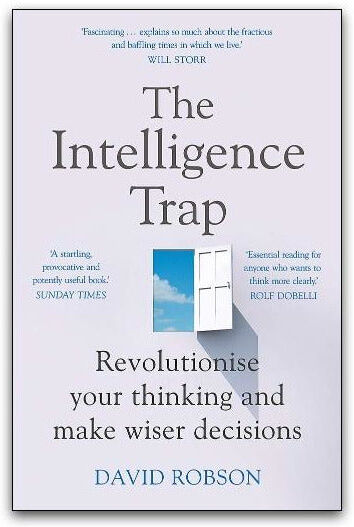
HODDER PUBLISHING David Robson, The Intelligence Trap, Psychology BooksDavid Robson, The Intelligence Trap, Psychology Books How was a brilliant physics professor tricked into carrying 2kg of cocaine across the Argentinian border? Why do doctors misdiagnose 10 to 15% of their patients? Why do Nobel Prize winners spread fake news? We assume that smarter people are less prone to error. But greater education and expertise can often amplify our mistakes while rendering us blind to our biases. This is the 'intelligence trap'. Drawing on the latest behavioural science and historical examples from Socrates to Benjamin Franklin, David Robson demonstrates how to apply our intelligence more wisely; identify bias and enhance our 'rationality quotient'; read and regulate our emotions; fine-tune our intuition; navigate ambiguity and uncertainty; and think more flexibly about seemingly intractable problems. The twenty-first century presents us with complex problems that demand a wiser way of thinking. Whether you are a NASA scientist or a school student, The Intelligence Trap offers a new cognitive toolkit to realise your full potential.1,99 £*Shipping: 1,99 £Secure redirect to the provider
-
Uplift Picks Montessori Bell Learning Toy DIY Cognition Training Game For Kids vacuum CleanerSpark curiosity and hands on discovery with this engaging Montessori bell learning toy designed to make learning playful and interactive. This fun educational cognition training game encourages children to match, identify, and respond to sound and...52,48 $*Shipping: 0,00 $Secure redirect to the provider
-
What are the Instagram algorithms?
The Instagram algorithms are a set of complex calculations used by the platform to determine what content users see on their feed. These algorithms analyze user behavior, such as likes, comments, and shares, to prioritize content from accounts that users engage with the most. The algorithms also take into account the timeliness of posts, the relationship between users, and the type of content being shared. By using these algorithms, Instagram aims to show users the most relevant and engaging content on their feed. **
-
Which sorting algorithms are there?
There are several common sorting algorithms, including bubble sort, selection sort, insertion sort, merge sort, quick sort, and heap sort. Each algorithm has its own advantages and disadvantages in terms of time complexity, space complexity, and stability. The choice of sorting algorithm depends on the specific requirements of the problem at hand. **
-
Should one learn without algorithms?
Learning without algorithms is certainly possible, as there are many different ways to acquire knowledge and skills. However, algorithms can be valuable tools for organizing and processing information, so learning about them can be beneficial. Understanding algorithms can help individuals solve complex problems, improve decision-making processes, and enhance their overall problem-solving abilities. Therefore, while it is not necessary to learn algorithms, doing so can certainly be advantageous in many fields. **
-
What are simple algorithms in Java?
Simple algorithms in Java are step-by-step procedures for solving a specific problem or performing a specific task. These algorithms are typically written in Java programming language and are designed to be easy to understand and implement. Examples of simple algorithms in Java include sorting algorithms like bubble sort or insertion sort, searching algorithms like linear search or binary search, and mathematical algorithms like finding the factorial of a number or calculating the Fibonacci sequence. These algorithms are fundamental building blocks in computer science and are essential for solving a wide range of problems in software development. **
* All prices are inclusive of VAT and, if applicable, plus shipping costs. The offer information is based on the details provided by the respective shop and is updated through automated processes. Real-time updates do not occur, so deviations can occur in individual cases. ** Note: Parts of this content were created by AI.